

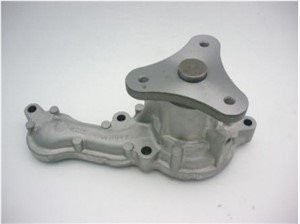
What is Honda Water Pump?
Honda water pump are a vital tool for various residential, light commercial or agricultural jobs and especially in rural areas, it can play a critical role. A honda water pump can drain water from a basement or shallow flooded areas, drain and fill a swimming pool or dam, or alternatively can also be utilised in the irrigation needed for agriculture.
Advantages of Water Pump
Efficient water management
Water pumps play a vital role in efficiently managing water resources. Whether you need to extract water from a well, drain floodwater or distribute water for irrigation, a reliable water pump can streamline the process.
Improved agricultural practices
For farmers and agricultural businesses, water pumps are invaluable tools. They provide the means to irrigate crops effectively, ensuring proper hydration for optimal growth.
Enhanced convenience and accessibility
Investing in a water pump brings unparalleled convenience and accessibility to your water-related needs. Instead of relying on natural water sources alone, a water pump allows you to access water from various locations, ensuring a steady supply.
Mitigating water-related challenges
Water pumps are reliable solutions for mitigating water-related challenges. In areas prone to flooding or excessive rainfall, pumps can efficiently remove excess water, minimising property damage and preventing water stagnation.
-

Honda Accord 1998-2002 Water Pump GWHO-39A 19200-P2A-A01 ...
• 100% factory tested for leakage and dimensional precision. • Designed to match OE coolant flow rate and pressure. • Bearings are noise and durability tested. • Built with exact OEM dimensions Add to Inquiry -
Honda Fit 1.5 1.3 2001-2004 Water Pump GWHO-47A 19200-PWA...
• The shaft and hub are precisely ground to exactly fit original equipment fan clutches. • The unitized seal protects the bearings and provides leak-free, long-life performance. • The one-piece Add to Inquiry -
Honda Accord Water Pump GWHO-50A 19200-RFE-003
• 100% factory tested for leakage and dimensional precision. • Designed to match OE coolant flow rate and pressure. • Built with high-quality bearings. • Bearings are noise and durability tested Add to Inquiry -
Honda CR-V EL1/2/3 1996-1999 Water Pump GWHO-40A 19200-P7...
Description: HONDA CR-V EL1/2/3 1996-1999 WATER PUMP GWHO-40A 19200-P75-003. Package Contents: Water Pump, Gaskets. Product Condition: New. Material: Aluminum Add to Inquiry



Why Choose Us
Our factory
Our is a factory specializing in the production of automobile fan motor, fan assemblies and distributors etc,because of the optimization of the technological process, we have lower production costs while taking into account the quality.
High quality
Our business is to sell the products manufactured by the factory abroad,the biggest advantage of our products is long service life and high performance-to-price ratio.
Professional team
We are in line with the concept of one-stop service, quality is priority, customer is the first,our professional technical r & d team who have more than 30 years field experience provides technical support throughout the process.
Online service
Customers learn about our products and send us inquiries through online and offline channels. We will respond to your needs as soon as possible and give you the greatest support.
Types of Honda Water Pump
Well pumps
This type of water pump is used to push water from an underground water source through pipes that connect to a home of business. Well water pumps are available in a variety of horsepower units. The benefit of this type of pump is that you can select a pump with the right amount of horsepower to fit your individual needs. You can also get well water pumps with enough horsepower to supply more than one home or business.
Pressure tanks
This type of water pump regulates the pressure of the water as it enters the pipes in your home. It is perfect for climates that have all four seasons. Reason being that seasonal changes can modify the pressure of your water. For instance, in the spring the melting snow will affect water pressure.
Sump pumps
This type of water pump is best for removing excess water due to rain, melting snow and floods. The sump pump is typically installed underneath a house or in a basement area where excess water can build up. The float inside the pump is activated when water reaches a certain level, which turns the motor on. The motor then spins the blade, pushing out the excess water up a drain hose and outside the building. Another benefit of submersible pumps are their ability to manage large amounts of water and be submerged without the hazard of electrical shortages.
Positive displacement water pumps
This type of water pump supplies a fixed amount of flow. They are ideal for buildings that have sensitive solids or need to manage high viscosity liquids. The advantages of this type of water pump include high efficiency and removal of air in the lines. For best performance, the clearance between the outer edge and the rotating pump needs to be close.
Centrifugal water pumps
This type of water pump uses a rotating impeller to move water through the pump. It then pressurises the discharge flow. The centrifugal water pump can be used with all liquids including liquid with low viscosity. It is the ideal water pump for thin liquids and high flow rates. The advantages of this type of water pump includes a boost in pressure from the intake line, has a continuous pressure source which offers a fire protection system, perfect for hot water pumping by moving water in a closed system, has an automatic switch controlled by the float and no suction lift is needed. For this system works best when the liquid recirculates avoiding overheating caused by low flows.
Components of Water Pump
Hub or pulley
This is responsible for transmitting the turning of the drive belt to the bearing spindle. It is made from sintered material, steel, cast iron or sheet metal.
Body
Made from aluminium or cast iron, it is the structural element that supports the other elements of the pump and provides the link into the cooling circuit.
Gasket
This is the element that guarantees the water tightness between the pump and the engine block. It can be made from rubber, paper or sheet metal with a rubber coating.
Bearing
It is the element that transmits the turning of the hub / pulley to the impeller. Its design and quality have a direct influence on the life of the pump. There are two types of bearings: Roller-ball or ball-ball. The roller-ball design ensures greater durability together the ability to sustain greater loads.
Seal
Its main function is to protect the bearing by preventing leaks and contamination from the coolant and to ensure that the pump is water tight. The quality of the seal along with a suitable coolant promotes the correct functioning of the water pump. It consists of two distinct parts, one is fixed to the body and the other rotates with the bearing axle.
Impeller
Its diameter, and the number and height of the fins, determine the flow and the pressure of the coolant in the cooling circuit. A reduction in the flow can seriously affect the life of the engine. The impellers used in airtex pumps are made from brass, sheet metal, plastic (pps-gf40) or cast iron, depending on the original design.
Application of Water Pump
Water supply
Water pumps are essential for providing clean drinking water to homes, buildings, and communities. They help extract water from wells, reservoirs, or other water sources and deliver it to the desired location.
Irrigation
Water pumps play a crucial role in agricultural practices as they are used to transport water from rivers, lakes, or wells to agricultural fields, ensuring crops receive an adequate water supply.
Industrial use
Many industries require water for their processes, such as manufacturing, power generation, and mining. Water pumps are used to supply water for cooling, boiler feed, wastewater treatment, and various industrial applications.
Drainage and flood control
In areas prone to flooding or water accumulation, water pumps are used to remove excess water and prevent damage. They help drain flooded basements, tunnels, construction sites, and other low-lying areas.
Fire protection
Firefighting systems rely on powerful water pumps to deliver water at high pressures for extinguishing fires. These pumps are often found in commercial buildings, residential complexes, and fire trucks.
Wastewater management
Water pumps are used in sewage systems to transport wastewater from residential and industrial areas to treatment plants. They help maintain proper sanitation and prevent the spread of diseases.
Water treatment
Water pumps are utilized in water treatment plants to transport water through various treatment processes, including filtration, disinfection, and chemical dosing. They ensure the efficient operation of water treatment systems.
How to Choose Water Pump


Purpose and application
Determine the specific purpose of the water pump. Is it for supplying water to a house, irrigation, dewatering, sewage handling, or industrial processes? Different applications require different types of pumps.
Water flow rate (gpm)
Calculate the required flow rate in gallons per minute (gpm) for your intended application. The flow rate determines how much water the pump can move per unit of time and is essential for sizing the pump correctly.
Total dynamic head (tdh)
Tdh is the total height that the water needs to be lifted or pushed, including the vertical height and friction losses in the pipes. Knowing the tdh helps determine the pump’s required pressure capacity.
Pump type
There are various types of water pumps, including centrifugal pumps, submersible pumps, diaphragm pumps, jet pumps, etc. Each type has its advantages and limitations, so choose the one that best suits your needs.
Power source
Consider the power source available for the pump, whether it’s electricity, gasoline, diesel, or solar. Ensure the pump’s power requirements match the available power source.
Pump material and construction
Check the material used to build the pump. Different materials are suitable for various environments and fluids. For example, stainless steel is corrosion-resistant and ideal for pumping water with high mineral content.
Pump efficiency
Look for a pump with high efficiency to ensure it consumes less energy and operates cost-effectively.
Maintenance and serviceability
Consider how easy it is to maintain and service the water pump. Access to spare parts and local service centers is essential for hassle-free repairs.
Brand and reputation
Choose a reputable brand known for manufacturing reliable and durable pumps. Read reviews and ask for recommendations from others who have used the same pump.
Budget
Set a budget for the water pump purchase, but avoid compromising quality for cost savings. A reliable and efficient pump may cost more upfront but could save you money in the long run.
Environmental factors
Take into account the environmental conditions in which the pump will operate, such as temperature, humidity, and potential exposure to corrosive elements.
Safety features
Ensure the pump has necessary safety features, such as thermal protection, to prevent damage in case of overheating or overloading.
Honda Water Pump Installation Precautions
Before replacing this water pump, please confirm that the cooling fan, thermostat, and antifreeze liquid engine cooling system are properly functioning.
To make sure that this water pump is suitable for the fixing model, please compare this new pump with the old removed one, or verify the pump part number with the engine model in the catalog.
When replacing the water pump, the sealing gasket at the pump installation position on the engine should be wiped clean. Also please check whether this pump has bumps due to the process of transportation. If yes, please grind the bumps with a steel file or fine sandpaper accordingly, otherwise, they may cause the coolant to leak from the installation surface.
Please check whether the pump installation surface is corroded or bumpy, these faults should be repaired in time to avoid leakage during the use of the pump.
Before installing, the water pump seal gasket should be moistened with coolant. When the sealant is needed (don’t use those sealant products that are suggested or forbidden by the manufacturer), it should not be applied too much and not near the pump chamber and must be cured before installation. Do not apply grease for easy
Installation, which will corrode the sealing gasket. A water pump with a rubber ring seal does not need to use sealant, otherwise, these two different complements mixed may lead to premature aging, resulting in coolant leakage.
Do not hammer the pump shaft to force the installation, please check the deep cause of the installation
Difficulty. If the cause is due to excessive scale in the cylinder body, please clean the installation position with a wire brush or spinning paper accordingly.
The bolts of the pump should be tightened gradually in the diagonal direction according to the specified torque. Excessive tightening is easy to screw off the bolts or cause damage to the gasket.
Please check the installation position and size before installing. It is necessary to make sure that the idler wheel, tensioner, and other related parts are on the same surface. Otherwise, the product may be damaged due to the offset tension of the belt (for example, the belt pulley retainer gets damaged or falls off).
If the belt needs to be adjusted for tightness, it must be operated strictly by the adjustment specifications. If the pump gets damaged in a short period right after the replacement of the new transmission belt, please detect the cause of the pump itself in the first place. If the pump runs well, then the tightness of the transmission belt should be checked, and the transmission belt should be examined whether it works in the same plane.
Must use professional antifreeze, and cooling liquid (such as tap water, or mineral water) is forbidden. Other it may cause serious corrosion not only to the impeller but also to the water pump and engine due to the inferior antifreeze's strong corrosivity.
Our Factory
Oubang automobile appliances co., ltd. Is manufacturer of cooling system parts fan motor since 1998, after more than 20 years of development and innovation, the company has developed four series of products and more than 500 hundred of varieties. The products are suitable for all kinds of japanese cars.


FAQ
As one of the leading honda water pump manufacturers and suppliers in China for over 20 years, we warmly welcome you to buy or wholesale high quality honda water pump at competitive price from our factory. For customized service, contact us now.
